
The principles that fuel my work as a trauma therapist.
When people ask me what I do, I say, “I’m a trauma therapist”. I’m not sure when I started adding “trauma”, because just saying “therapist” would technically be accurate – but maybe it’s because it doesn’t paint a complete enough picture of what my work is focused on. What feels most accurate would be to say, “I’m an integrated experiential trauma therapist”. A what now? But before I get into explaining why experiential therapy is what I do, I want to first talk about the underpinnings that guide my work.
In case you’re not interested in that and want just to jump to the TL;DR of how I approach my work as a therapist, here it is:
TL;DR = With an integrated experiential approach to therapy, I am incorporating knowledge of neuroscience, and how the brain is impacted by trauma; I’m using a relational and attachment-focused lens, because as human beings we are wired for connection and form the blueprints of how we come to understand ourselves, others, the world, in our earliest years through relationships; and I am considering the fact that we are members of complex systems, and nothing happens in isolation. We are impacted by – and impact – everything around and inside of us, throughout our lifetime. And finally, I’m incorporating somatic work, because we know trauma is stored in the body, and we need to work with the body in order to release that trauma. No matter what modality or approach I use, my work is informed by these principles, which ensures that we are helping your brain heal the way that it wants to – and can – heal. We’re working to shift your implicit memory system in a way that we know is effective, for long-lasting healing. And THAT is the magic of experiential therapy.
—-
When I first started teaching myself about the nervous system and its connection to chronic pain, I came across something called the Polyvagal Theory. The Polyvagal Theory emphasizes the role that the autonomic nervous system – specifically the vagus nerve – has in regulating our health and behavior. Learning about this theory is what cemented my awareness of the importance of incorporating neuroscience into my view of mental health; I wanted to understand the neurobiological underpinnings of the symptoms and presentations that we cluster to categorize as “diagnoses”. I consistently found myself frustrated with the way the field of mental health seemed to reduce individuals to diagnostic categories rather than seeing individuals and their relational worlds. In my own research, to try and heal my own chronic pain, I came across several courses and programs that were focused on working with and healing a traumatized nervous system. Engaging in these courses is what clarified for me my desire to work with individuals who have experienced prolonged or ongoing trauma: I experienced so much healing and developed a language to understand what was happening in a way that had not previously been emphasized. The experience made me passionate about sharing this newfound knowledge with anyone that would listen.
Fast forward, and when I became interested in working with trauma, specifically complex trauma, from a clinical therapy standpoint, I found myself drawn to research that I now know fits under the umbrella of Interpersonal Neurobiology (IPNB). IPNB is a multidisciplinary framework that integrates findings from many fields, including psychology, neuroscience, and systems theory. With an IPNB-informed lens, we are able to deepen our understanding of how the mind, the brain, and relationships are both differentiated as well as intricately linked processes that interact to create our lived experience. We also know that nothing exists in isolation: we are all part of complex systems, internally and externally, and by approaching the work with a systems lens, we can address the multiple facets of who you are and the impacts of various factors on your life.
If I lost you, my apologies. There’s a reason I’m not a professor of this stuff, and I don’t have to describe these things so much as I have to help guide my clients through scenarios that allow them to actually experience what I’m talking about. This brings me to being an experiential therapist:
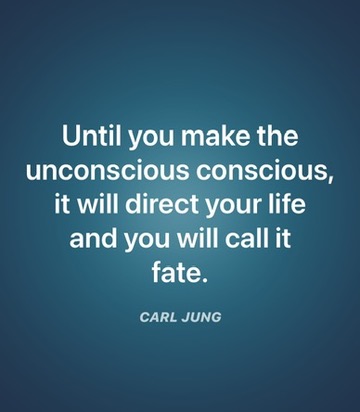
Experiential therapy is a term that encompasses many approaches. For me, and for the group I work with, it means that we like to incorporate the modalities that help you heal the way your brain wants to heal. Depending on your symptoms and goals for therapy, I may utilize a variety of different experiential approaches, including Internal Family Systems (IFS), Ego State Therapy (EST), Eye Movement Desensitization & Reprocessing (EMDR), Accelerated Experiential Dynamic Psychotherapy (AEDP), Emotion Focused Therapy (EFT), Somatic Experiencing (SE), Pain Reprocessing Therapy (PRT), Psychodrama, and more. Yes, I really integrate aspects of all of those approaches. For the sake of time, I’m not going to explain each of these. I also don’t think it really matters, for the purposes of this post. What does matter is the reason behind it, because each of these modalities has an experiential element that is crucial for long-lasting healing. Here’s why: every experience we’ve ever had impacts the way our brain perceives whether we are okay or not in any given situation; it adds to the blueprint of whether we move towards something (if there’s perceived safety) or away from something (if there’s perceived danger). All of this information is stored in our implicit (unconscious) memory system because that’s how our brain is wired. Sometimes, our perception of okayness is skewed, and our brain interprets information incorrectly based on outdated or false information. In order to have any sort of shift in the implicit memory system, we have to actually experience the emotional knowing that that information is outdated or false; we can’t talk to our implicit memory system with words, we have to access and communicate with it using other methods. Being an experiential therapist means that I am guiding you through the process of activating the old emotional knowing in a way that enables you to experience the new emotional knowing & thus shift your implicit memory system. We can’t change what happened to us, but we can change what we learned if what we learned isn’t totally true, or isn’t totally true anymore. And here’s where this gets really cool, and what makes it so transformative:
Your nervous system is feeding you information from your body constantly. Your lower brain processes 11 million bits of information per second, and your upper brain is processing somewhere between 5-60 bits of information per second. Our brain is sweeping our system for info, all the time. My job is about helping you come to learn the language of your brain, your body, first. I want you to come into relationship with yourself because there’s all this data happening in your lower brain that most of us ignore. Why do I think this is really cool? Because it emphasizes what I know to be true: I may know some stuff about the brain, about trauma, about therapy, but YOU are the expert on your story. Your body is telling you so much information all the time, and if we can help you shift your understanding of how and what to pay attention to, we can learn invaluable insights that will boost your healing. You bring a crucial element to this work, and I cannot do this without you. Together, we create a space where you are able to grow a ton of self-trust because you are coming into relationship with your own intuitive mind, your implicit memory system, and discovering there’s wisdom there, RATHER than leaning into me as a source of wisdom. I actually CAN’T tell you what is true for you – your body will do that for us. My job is to be there with you, to guide you through the process of learning to tap into this wisdom, developing the capacity to handle the messages it has to say, and finally shifting those outdated or false messages that are negatively impacting your life, by experiencing something different. We can’t think our way out of something that our body implicitly knows; we have to actually experience the emotional knowing of something different. All of the different acronyms for therapeutic approaches and methods that I may use as an experiential therapist are really about helping you do this.
So, to recap, by being an integrated experiential therapist, I am incorporating the knowledge from neuroscience, attachment, and systems theory to work with your brain the way that your brain wants to (and can) heal. What I need in my toolbox to be an effective experiential therapist is a collection of knowledge and tools in a variety of domains (sensation tracking; some understanding of memory reconsolidation (neuroscience), an understanding of how to change the implicit memory system; and some parts work) and a willingness to embrace the unknown, so that I can guide you in this transformative process, too.
Stay tuned for more posts that will cover a variety of topics relating to trauma therapy and my approach to working alongside you on your healing journey. Please don’t hesitate to reach out with any questions or topics that you’re interested in learning more about! Thank you for being here.
 Meraki Healing Center, PLLC
Leave a comment